Design Like a Futurist
Design Is Changing Faster Than Most Designers Can Keep Up
Most design training prepares you to respond to what exists.
This course teaches you how to think across time — so you can anticipate change, make better decisions, and stay relevant in the decade ahead.

Design Thinking is not Good Enough
Design thinking is powerful.
But it has a blind spot.
It helps us respond to what is.
It is far less equipped to help us design for what is emerging, shifting, or disappearing altogether.
And that matters — because the conditions shaping design are no longer stable.
AI is accelerating execution.
Systems are becoming more complex.
The future is arriving faster than most design training can keep up.
The risk is not poor design.
The risk is designing within the present while the conditions are changing.
What Changes After This Course
Before:
You respond to briefs within fixed assumptions
Your ideas feel safe or incremental
You struggle to articulate long-term value
You design for stability in a changing world
After:
You see beyond the brief and question hidden assumptions
You generate future-relevant, differentiated ideas
You make decisions with greater strategic confidence
You design for change, not just for the present
Who Is This For
This professional course is for designers who feel:
The world is changing faster than their training prepared them for
Their work is becoming predictable or constrained
They are reacting to problems instead of shaping them
They want to move from execution to strategic design thinking
Whether you are a student, graduate, or early-career professional, this course expands how you think — not just what you make.
Why This Matters Now
The world designers are working in is shifting:
AI acceleration.
Climate volatility.
Technological disruption.
Geopolitical instability.
These forces are reshaping every design brief.
Yet most designers are still trained to think linearly, locally, and within short-term horizons.
Design Thinking is powerful — but it was never built to anticipate cascading systems change.
To design responsibly in this era, we must expand our frame.
That expansion is futures thinking.
The risk is not that design becomes less important.
The risk is that designers who cannot think across time become replaceable.
What You Will Learn
In this course, you will learn how to:
Frame design challenges across multiple time horizons
Diagnose the deeper forces shaping your brief
Generate multiple plausible futures before committing to one
Anticipate second- and third-order design impacts
Prototype for uncertainty rather than stability
Core Idea
The designers who thrive in the coming decades
will be able to use both.
What happens if You Don't Adapt?
Most designers will continue working within the present.
Their work will remain competent —
but increasingly constrained by assumptions they cannot see.
Over time, their relevance will erode.
The designers who learn to think across time will not just respond to change —
they will shape it.
What This Course Enables
In five structured modules and over four hours of content, you will develop twelve applied futures tools that elevate your design practice — helping you think more holistically, anticipate emerging trends, reframe problems across time, and prototype solutions that create meaningful long-term impact.

See Beyond the Brief
Understand problems across time, not just within immediate constraints.

See Deeper Forces
Reveal the systems, patterns, and assumptions shaping your design.

Anticipate Design Impacts
Think through consequences before they become risks.

Create Future-Relevant Work
Develop ideas and emotionally resonant concepts that remain meaningful as conditions change.

Systems Thinking
Unpack multi-dimensional perspectives and worldview-level insight to design holistic prototypes

Portfolio Innovation
Develop a portfolio that showcases your ability to solve real-world problems with visionary design solutions.
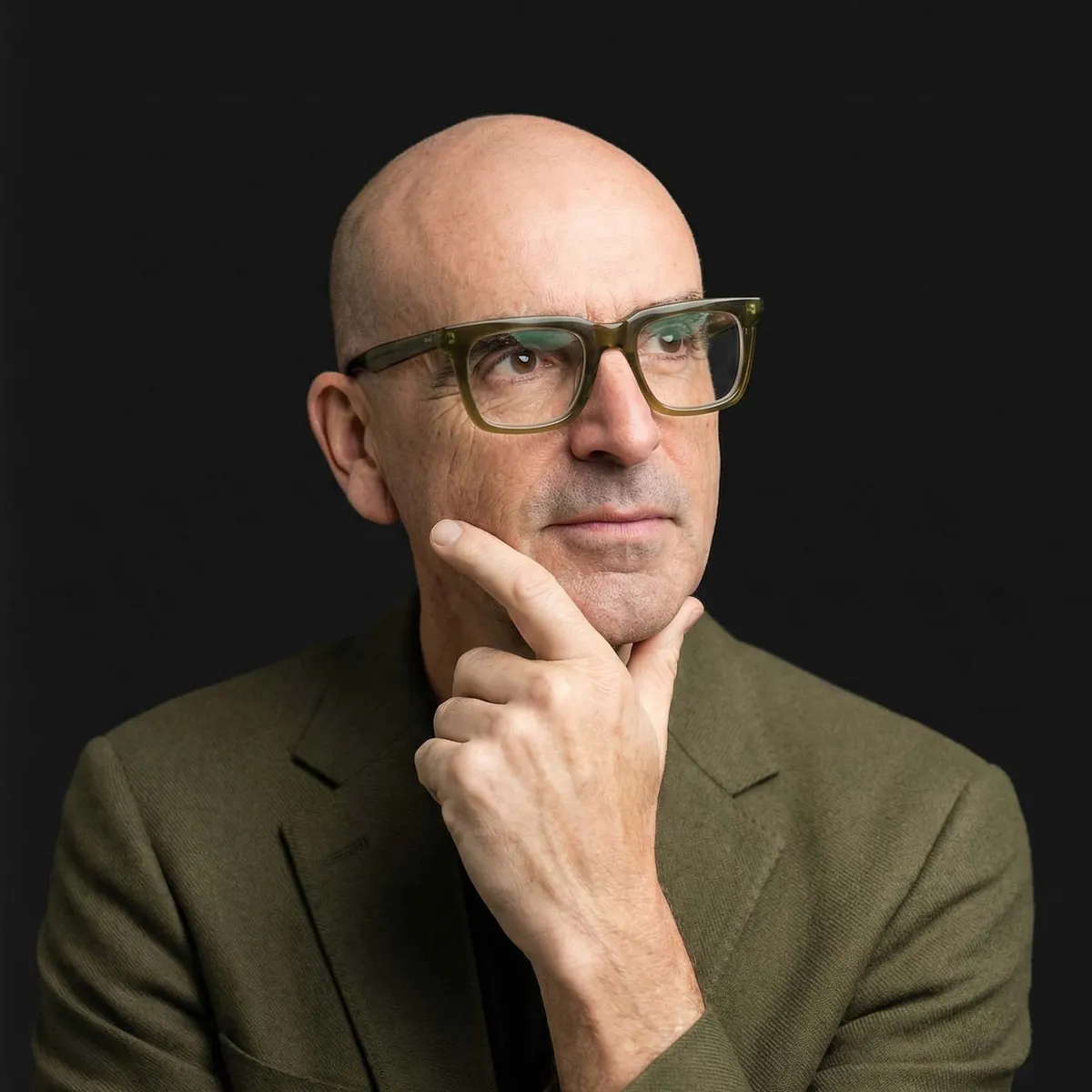
Meet Your Mentor
Learn from Dr Phillip Daffara
Architect. Futurist. Regenerative Designer.
With over 30 years integrating architecture, strategic foresight, and place-based regenerative design, Phillip has led award-winning projects and guided design teams across complex, real-world challenges.
His teaching blends practical know-how with creative exploration, helping you expand your imagination, deepen your strategic foresight, and design with greater purpose and impact.
“Phillip is rare in that he is creative/innovative; and detail/analytics focused. He both an accomplished architect and futurist.”
— Prof Inayatullah S., UNESCO Chair in Futures Studies
“Phillip has facilitated strategic foresight and place visioning workshops for the College since 2012. His creativity and ability to engage diverse stakeholders has yielded extraordinary progress for our learning village”
— Fitton C., MIC Principal
“Workshop participants left the course feeling more connected, resilient and resourced. Three things we are going to need"
— Driver A., GM Tasmanian Leaders
What Makes This Different?
Unlock exclusive tools and skills to excel in the design world.
01
Cutting-Edge Tools
Applied tools you can use immediately in studio or practice.
02
Stand Out from the Crowd
Built specifically for designers (not generic futurism theory)
03
Make Better Decisions
Integrates systems thinking, foresight, and regenerative principles
04
Personal Expansion
Designed to permanently expand how you see problems
Not Ready Yet?
Download:
“10 Hidden Design Problems — and the Futures Tools That Solve Them”
Identify the blind spots shaping your work —
and learn how to move beyond them.
Begin Your Practice as a Futures-Informed Designer
The future will not wait.
The question is whether you are designing for it — or reacting to it.
Frequently Asked Questions
Who is this course for?
This course is designed for:
- Design students who want to stand out
- Early-career designers looking to grow their creative impact
- Architects, urban designers, industrial designers, fashion designers, urban planners, UX designers
- Creatives who want to think bigger, deeper, and further ahead
- Anyone who feels the world is changing too fast and wants thinking tools to keep up
- Designers seeking a regenerative worldview and expanded purpose
Do I need prior experience?
No prior experience is required. The course assumes that you have design thinking skills and introduces futures thinking tools to improve design processes and advances to complex concepts.
How long do I have access?
You receive 12 month access to all course materials and future updates within that period. Currently you have over four hours of content structured into five modules and twelve lessons.
Are there live sessions?
No. To support your learning journey, you can replay the videos and practice the tools using the Practice Guided provided.
© 2025 FutureSense Academy | Privacy Policy | Contact